By Louise Taylor, Oxford Brookes University
I was invited to contribute an essay to the publication Inheriting the Family: Objects, Identities and Emotions. The book was published in February 2026, and I followed up with a visual component in the form of an art exhibition that was held at a mental health conference in Oxford, the Masters Events, Transform Trauma 2025.
Each Morning at Eleven
She isn’t going to come, she has a lot going on.
It simply doesn’t feel like the “right time”.
And I understand that.
That particular past isn’t wanted in this particular present.
I have agonised for years about how and where to show the work, how to engage an audience, and how to take my very private world into a public space. This is my first solo show, and I really need my mother to tell me which images I can leave in and which she would feel more comfortable taking out. My early life after all is considered a “sensitive topic”; something for discussion with trusted individuals, rather than to be spread out on a gallery wall.
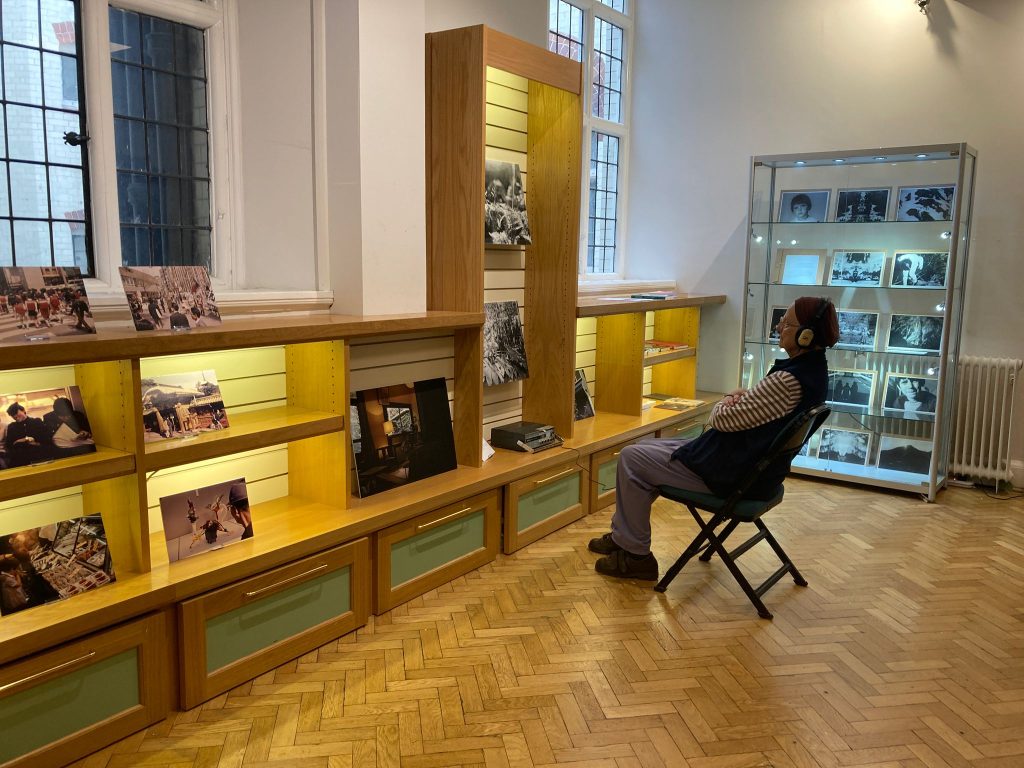
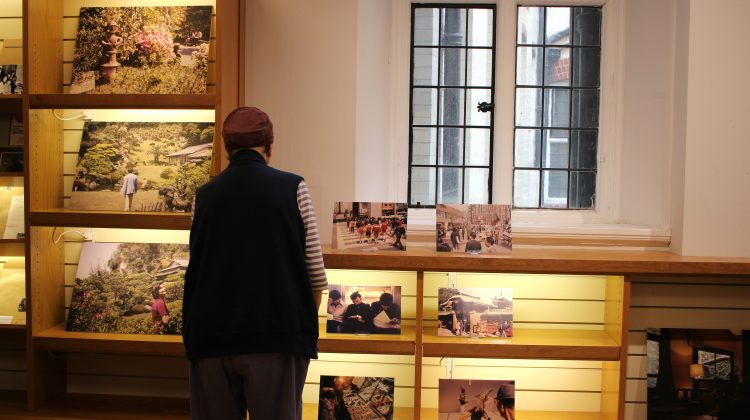
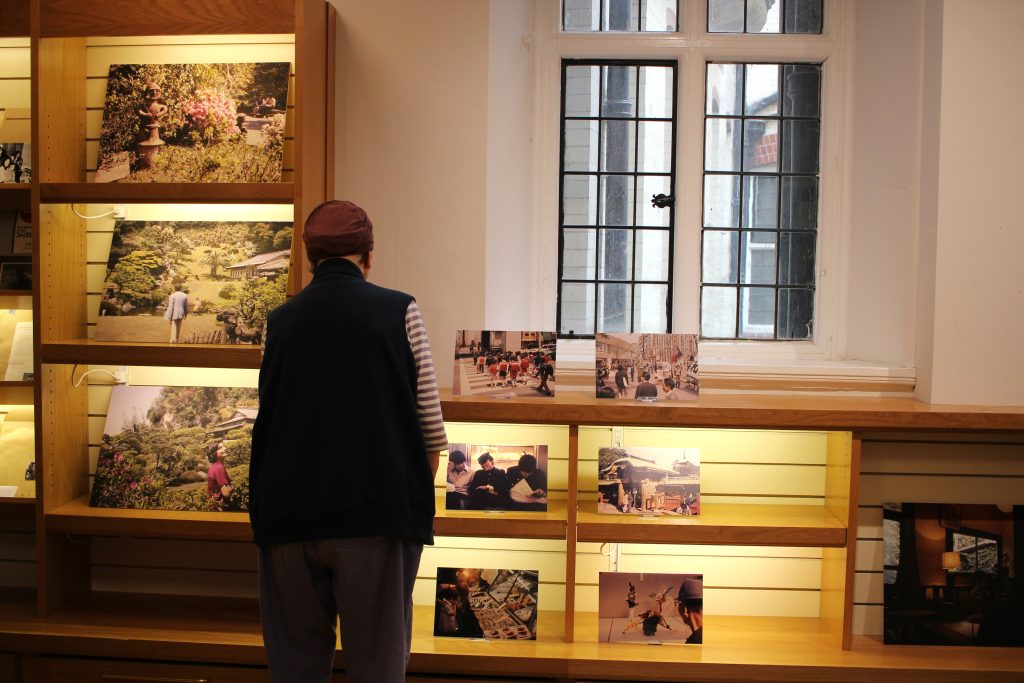
Large photographs taken by my late father are blown up from Kodak colour slides and rest on the exhibition shelves. A tall gentleman with his hand on his hips is thoughtfully examining the belongings displayed in a cabinet in the corner of the room. My mother arrives in the gallery, her backpack slipping off one shoulder, tugging her coat askew, in the usual way. “Hello, Lou,” she greets me cheerfully. She places her bag on the chair and starts to unbutton her long black waterproof coat.
“Oh, it’s you!” she says, with a sudden start as she catches sight of my brother, her son, the rather tall gentleman in the corner of the room with his hands on his hips. “I didn’t recognise you,” she laughs, reaching her arms out to embrace him. “Oh dear.”
This project begins in 2018 when I unearth hundreds of my father’s photographs and home movies taken in the early ’70s in Japan. He died in 1975, a year after our family returned to the UK, just before my sixth birthday. In this archive of photographic material I uncover information that my mother and brother did not tell me about my father, about me, about us and our relationship together.
They move around the gallery in different directions. My brother picks up a print of an angel playing a harp: Angelus Musicus, The Musical Angel. My mother places the headphones that lie on the shelf over her ears and listens to a recording made by my late father, her husband. He begins: “This is a continuous recording made on 19 August 1973 from our garden in western Tokyo, not far from Shibuya. It is an extremely hot day, but there is a breeze. You can hear sliding doors…”
My mother closes her eyes.
“…and distant traffic, but the dominating sound is all these extraordinary insects.”
I pull up a chair and gesture for her to sit down.
“They go in mounting choruses, chorus leaders and the whole army of them, drowning out all the other sounds…” To him, the sound is magnificent. These insects are an orchestra. “The conductor takes the lead, and the others follow.”
I can hear the cicadas through the padded headphones. My father’s blend of enthusiasm with Received Pronunciation belongs to another time.
My mother has not listened to his voice for almost fifty years. “It’s just not the right time,” she often says to me whenever I try to discuss what to do with my father’s belongings.
Now she sits on a small folding chair in the centre of a gallery space, listening to a recording of my father’s voice.
A few days later she reflects: “It’s much lighter than I thought it would be, the exhibition…” And once again we find ourselves circling its central theme: of how to look back at the past. At the horror of those last months of my father’s life; of her desperate attempts to get him the care he so urgently needed; of what she can see is going to happen, to him, to her, to us, his suicide.
And yet, somehow, my mother finds it in herself, to look beyond those harrowing final weeks to what is good, to what is ordinary, to what brought him joy.
“I’ll come back,” she agrees. “I’ll come back to your exhibition.”
And she does. Each morning at eleven, she arrives and sits next to me in the gallery, for a while.